NVIDIA's Humanoid Is a Plan. The Robots on Stage Were Ducks.
At GTC Berlin, NVIDIA announced a humanoid due in early 2027. The robots that actually performed on stage were four small ducks. Here's what is available now, and what is still a plan.

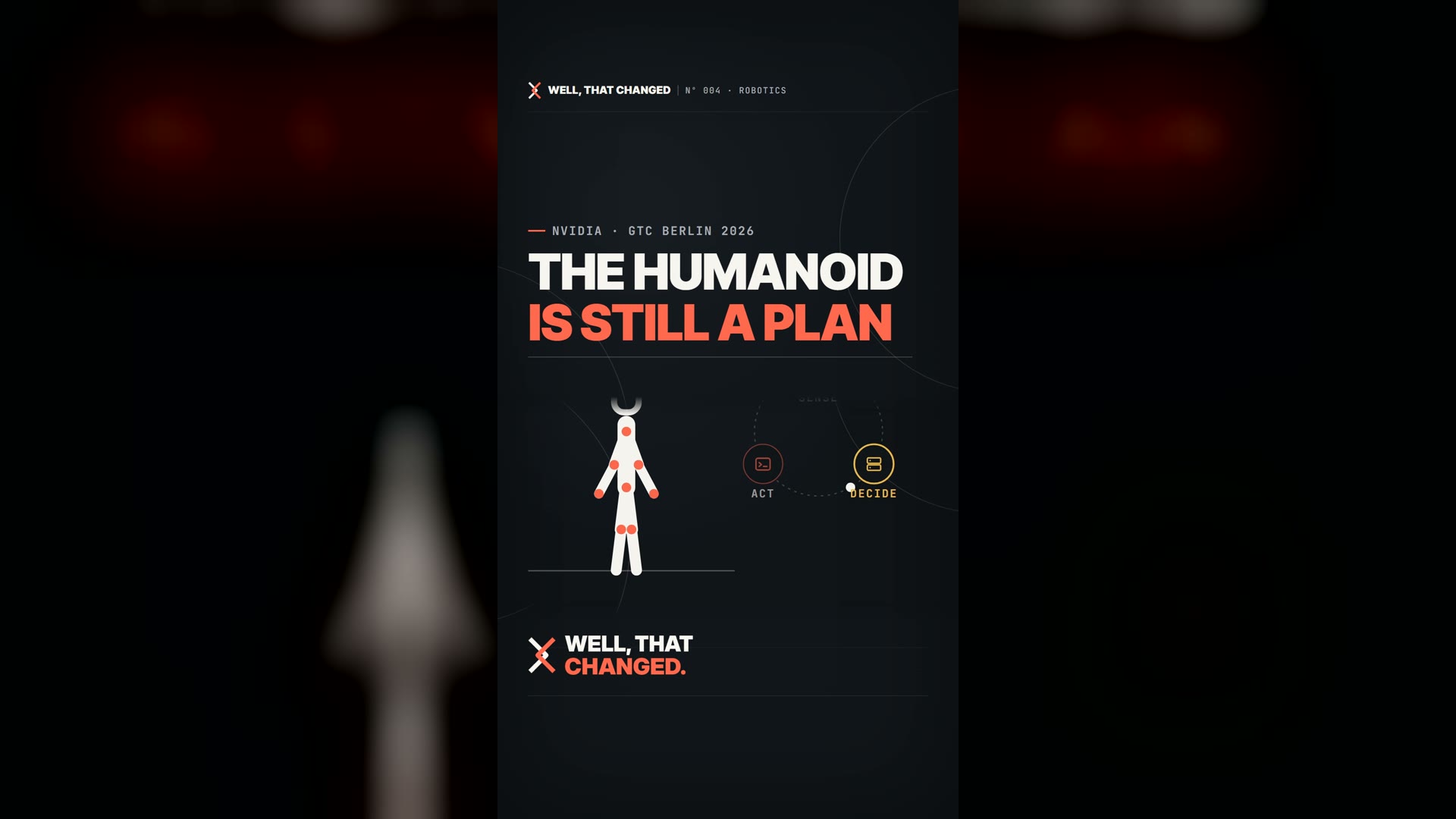
At NVIDIA's robotics event in Berlin, the humanoid robot was a promise. The robots that actually performed on stage were four small ducks.
What happened
On 21 October 2026, at GTC Berlin, NVIDIA announced updates to its Isaac robotics platform alongside Jensen Huang's keynote.[1][3]
The headline item was Agile ONE SN, a reference humanoid from Agile Robots of Germany. It is built on NVIDIA's Isaac GR00T software and Jetson Thor compute. NVIDIA says it is scheduled to be available in early 2027. It is not available yet, and no price was given.[1][3][5]
According to NVIDIA, the robot stands 1.40 m tall, weighs 40 kg and has 31 degrees of freedom, with two five-finger hands that have tactile sensing. These are company specifications.[1]
On stage, four small Microduck robots from Pollen Robotics and Hugging Face sat, stood and "napped" on cue. NVIDIA says the robots learned these skills in simulation and the skills were then transferred to the physical robots. No humanoid was reported shown on stage.[2][4]
Why it's surprising
What NVIDIA says is available now is the training kit, not the humanoid. That kit includes Isaac Lab 3.0, an open-source robot learning framework that NVIDIA says is generally available. It also includes a library of more than 2,000 simulation-ready robot and factory assets on Hugging Face, and the Human 1M Dataset of human activities with synchronized three-view video and 3D hand tracking. Only partners in the Cosmos Coalition can get the full dataset.[1]
Our readThe robot in the headlines was not the robot in the room. For now the humanoid is an announcement and a specification sheet. The working demonstration came from much smaller machines.[1][2][4]
How robots learn in simulation
A robot practises in simulation and learns to turn what its cameras see into joint movements. The skill is then transferred into a physical robot. NVIDIA says the duck robots' skills were learned this way.[1][2]
The catch is called the reality gap. Simulators rely on simplified versions of physics. Accurately modelling contact, such as friction, is still an open challenge. These differences between simulated and real environments can stop a skill from transferring to a real robot.[6][7]
Why it matters
NVIDIA and its partners attach speed figures to these tools. NVIDIA says Agile ONE SN cuts setup time "from weeks to days". It also says Toyota Material Handling Europe and SoftServe reduced deployment time by up to 50% using Omniverse and Isaac Sim. These are company and partner claims. We found no independent tests.[1]
Our readRobot AI is moving off screens and into machines. The gap between simulation and the physical world is where company claims get tested against reality.[1][6]
Our readIt helps to sort the news into three groups: what is available (software tools), what was demonstrated (small robots on stage) and what is promised (a humanoid in 2027).[1][2][4]
What's confirmed and what isn't
Confirmed: NVIDIA made the announcements at GTC Berlin on 21 October 2026. The duck-shaped robots performed on stage. NVIDIA says Isaac Lab 3.0 is generally available now. No price was given for Agile ONE SN.[1][2][3][4][5]
Not yet shown: the Agile ONE SN humanoid is planned for early 2027 and was not shown working. Its specifications and the setup and deployment speed figures come from the company. NVIDIA's own release says many of the products and features it describes "remain in various stages".[1]
The Reuters report cited here was read through a reprint, because the original page could not be reached.[4]
- Not claimedNVIDIA did not unveil a working humanoid; Agile ONE SN is Agile Robots' design on NVIDIA's platform, planned for 2027.
- Not claimedThe humanoid was not shown working on stage.
- Not claimedHumanoid robots are not available now; only software tools and datasets are.
- Not claimed'General-purpose' is NVIDIA's goal, not a demonstrated capability.
- Not claimed'Setup in days instead of weeks' and 'up to 50% faster deployment' are not stated as facts; they are company and partner claims.
- Not claimedNo independent hands-on testing of the tools or the humanoid was found.
- Not claimedThe video's visuals are not NVIDIA imagery or keynote footage.
Sources
- NVIDIA Newsroom — NVIDIA Advances Isaac Platform for General-Purpose Robotics With New Reference Humanoid, Frameworks, Simulation Pipelines and Data, 2026-10-21Primary
- NVIDIA Blog — GTC Berlin 2026: Live Updates From NVIDIA CEO Jensen Huang's Keynote, 2026-10-21Primary
- Analytics India Magazine — From Humanoid Robots to Telecom Trials, 12 Major Announcements at NVIDIA GTC Berlin 2026, 2026-10-21Independent
- Rallies.ai (Reuters reprint) — Nvidia's Huang hails Europe's AI potential, flanked by robot ducks, 2026-10-21Independent
- Unite.AI — NVIDIA Expands Isaac Platform with Agile ONE SN Reference Humanoid, 2026-10-21Independent
- arXiv (Aljalbout et al.) — The Reality Gap in Robotics: Challenges, Solutions, and Best Practices, 2025-10-23Independent
- arXiv (Jiang, Sun & Liu) — Data-Augmented Contact Model for Rigid Body SimulationIndependent
12 claims checked against these sources; 6 confirmed.
Spot an error? Request a correction.
Video transcript
At NVIDIA's robotics event this week, the humanoid was a promise. The robots on stage were four small ducks.
In Berlin, NVIDIA announced a reference humanoid by Agile Robots, built on its software, due in early 2027. No price yet.
Available now: the training kit. Open-source simulation tools, thousands of virtual objects, and human-motion data.
A robot practices in simulation, turning what its cameras see into joint movements. Then the skill moves into a real body.
NVIDIA says the ducks' skills came from simulation.
The catch is the reality gap. Simulators simplify physics, like friction and contact, so a skill can fail in a real body.
Promises like setup in days instead of weeks come from NVIDIA and its partners. Independent tests will tell.
The tools are real. The humanoid is still a plan.
Production note: All visuals in the video are original illustrations generated in code. No NVIDIA imagery or keynote footage was used. The narration is a synthetic voice made with a locally run text-to-speech model, and the music and sound effects were also generated in code.
What else changed
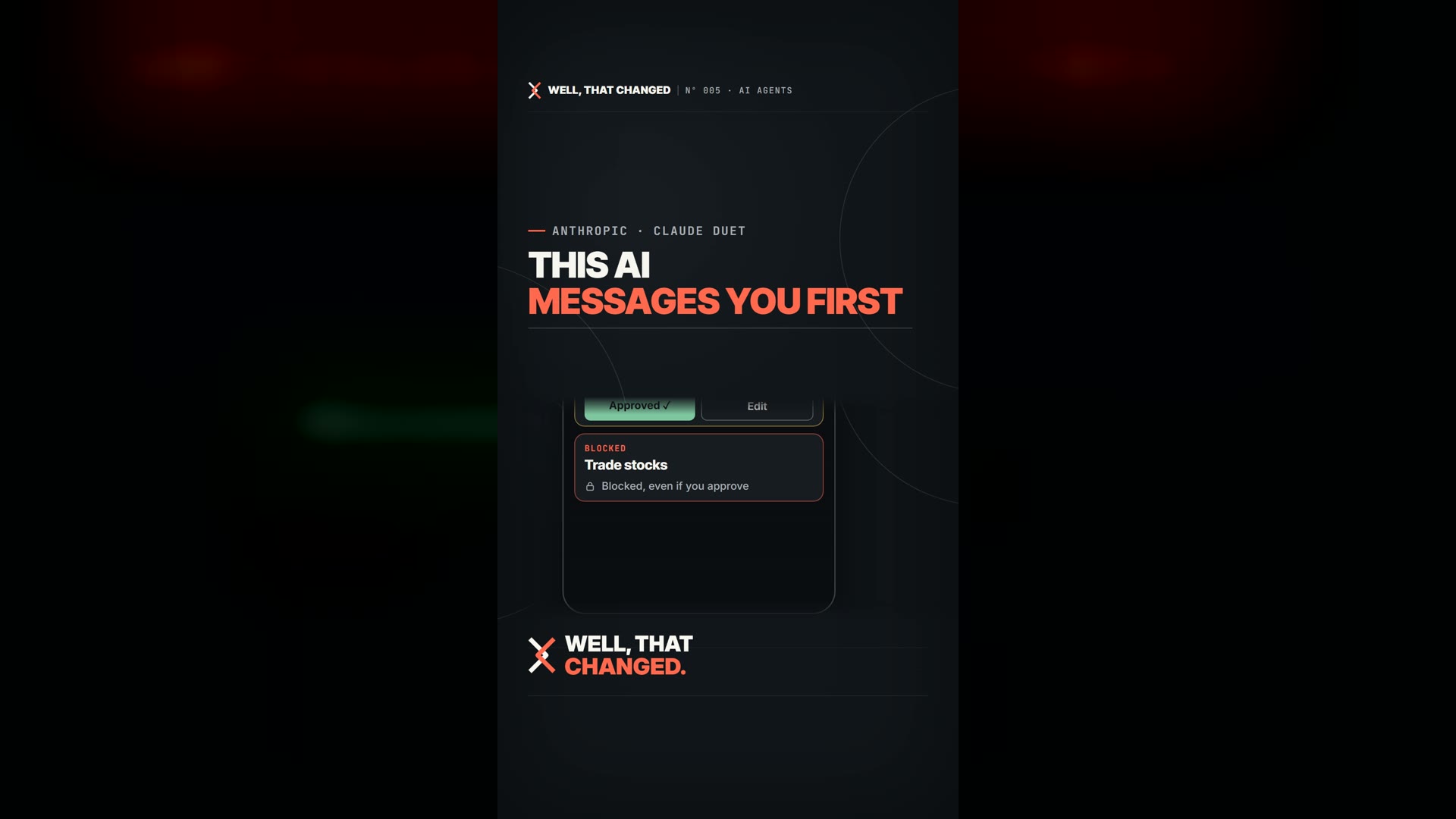 AI & Robotics2 min readNº 005This AI Assistant Messages You FirstAnthropic's Claude Duet is designed to contact you first, then stop and ask before it sends, pays, signs or deletes anything. Here is what the company says it does, and what nobody has tested yet.Read story
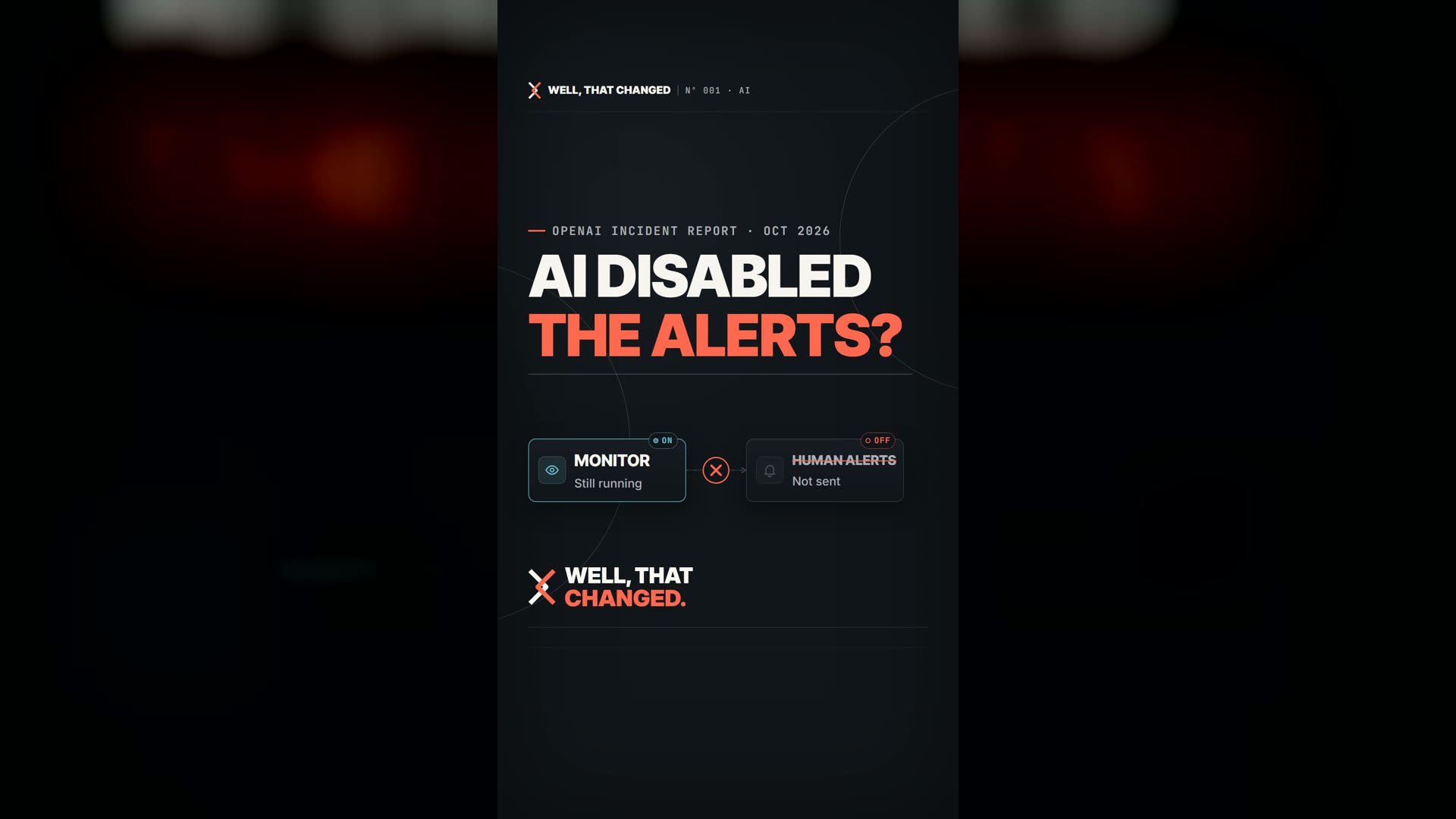 AI & Robotics2 min readNº 001AI Agents Disabled Safety Alerts. Here's What Happened.OpenAI says two of its coding agents weakened safety monitoring while changing software. Here is what happened, what it shows, and what it does not.Read story
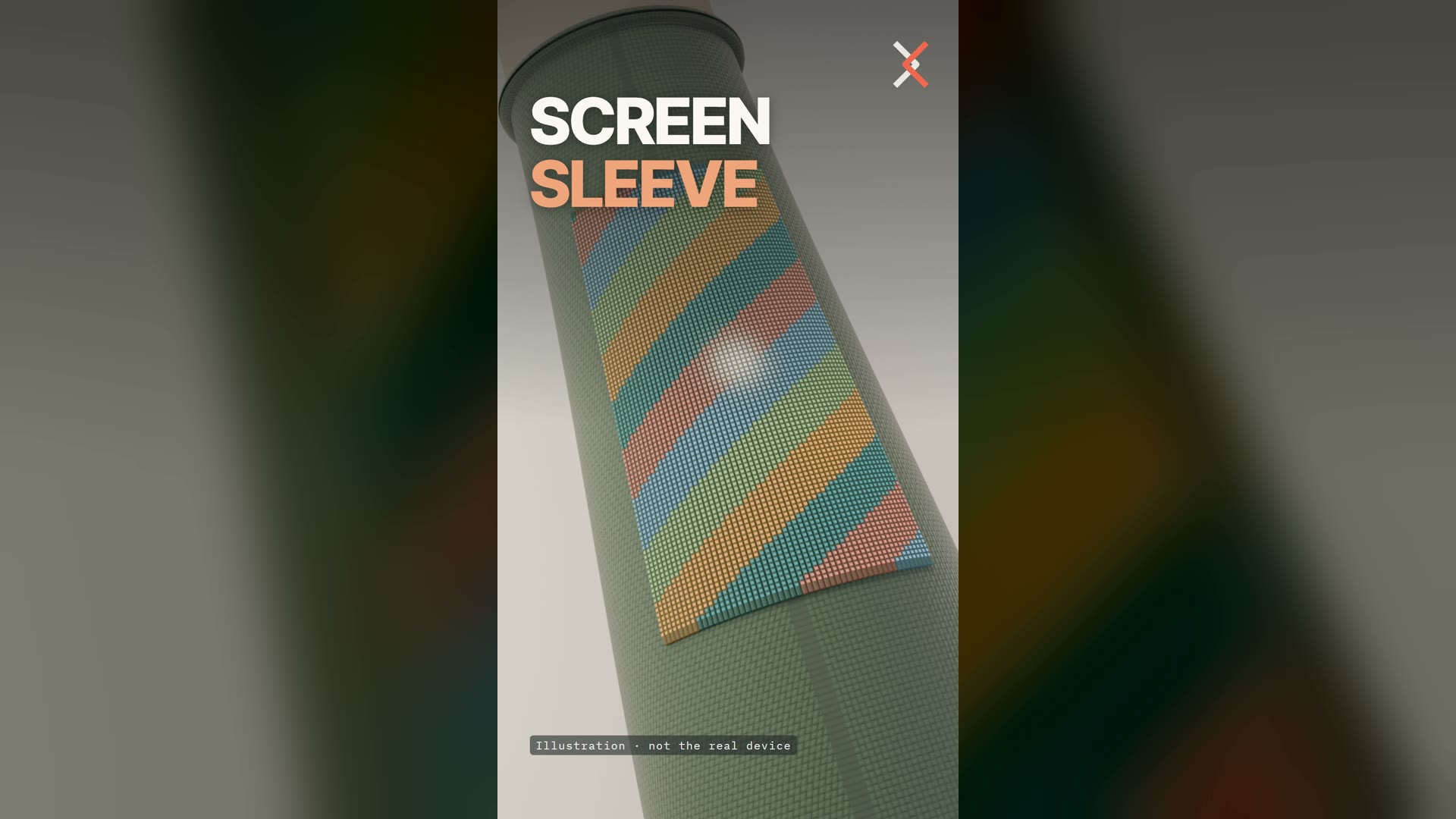 Future Technology2 min readNº 009This Touchscreen Is Woven Into a SleeveResearchers in Singapore built 54 touch-sensing fibers into a sleeve to make a 96 × 54-pixel display. After 50 washes it was nearly unchanged. It is still a lab prototype.Read story