Moon Trash Could Become Tomorrow's Spare Parts
An MIT student team won first prize in NASA's LunaRecycle Challenge with a system that grinds discarded packaging and molds it into composite parts. The foam usually thrown out becomes part of the material.

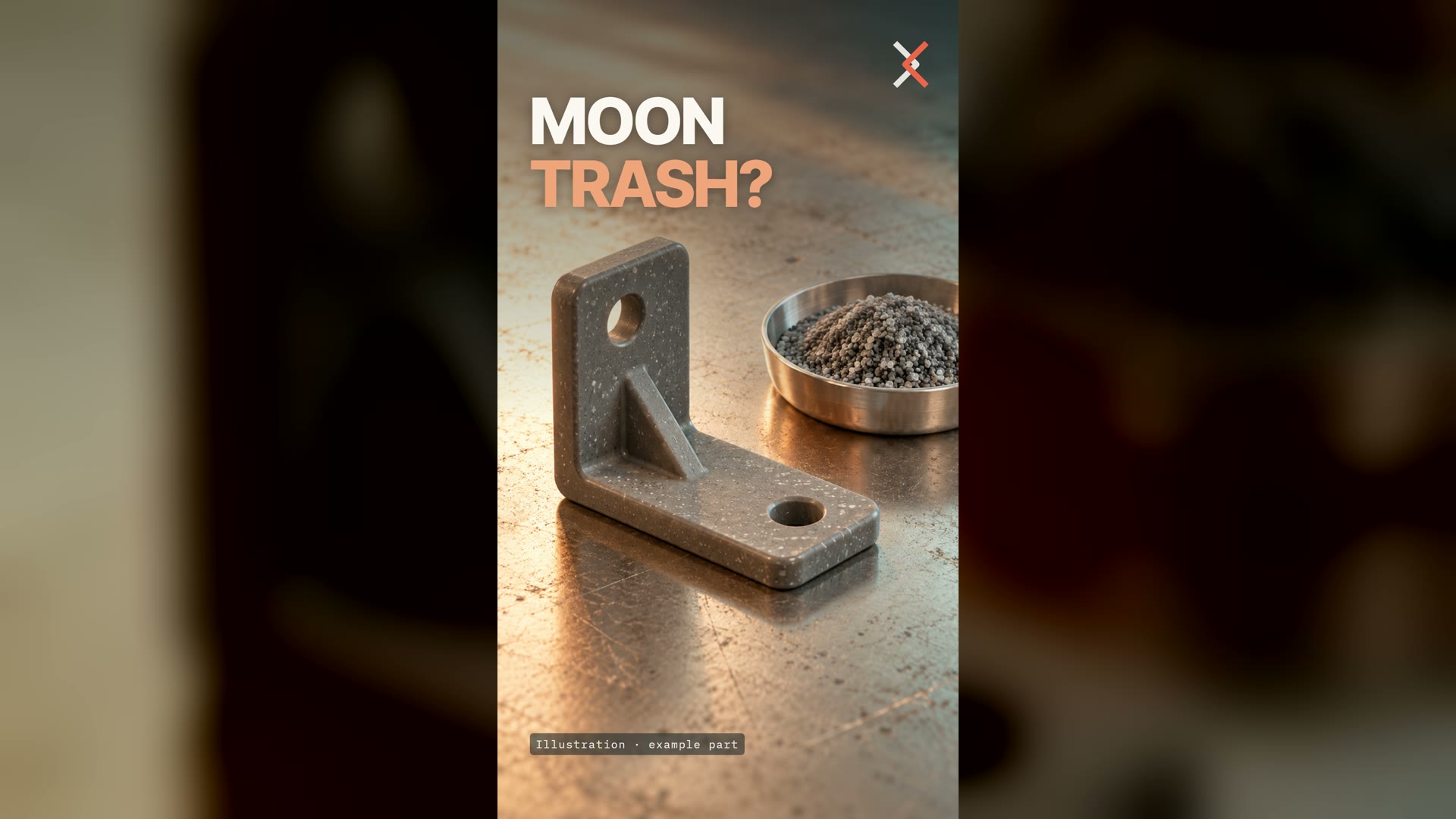
An MIT student team has shown a way to turn discarded packaging into composite parts. The work won first prize in a NASA challenge built around recycling for future lunar missions.
What happened
An MIT student team called CERBERUZ won first prize in Phase 2 of NASA's LunaRecycle Challenge. NASA announced the award on 28 Aug 2026.[1]
The final demonstration took place at the University of Alabama, 24–28 Aug 2026.[1]
MIT News reported on 20 Oct 2026 that the team took first prize in the Prototype and Digital Twin tracks.[2]
Why it's surprising
The team's system uses packaging foam on purpose. NASA described the approach as using "Zotek foam as reinforcement rather than treating it as contamination". MIT News calls the foam a "reinforcing filler".[1][2]
Our readOur reading: in most recycling, mixed materials are a problem that has to be sorted out. Here, part of the mix that would normally be removed becomes part of the finished material.[1][2]
How it works
The system starts with bulky packaging waste. MIT News describes it as thermoplastics and everything else, including Zotek F30 foam.[2]
First, the waste is "ground into a fine powder". In the team's injection molding machine, called PERSEPHONE, "the thermoplastics melt with the remaining materials suspended in the molten plastic".[2]
The mixture is then injected into a mold to make a composite part.[2]
Why it matters
According to MIT News, the aim is to "reduce materials needed to be launched from Earth".[2]
Our readIf the approach works on lunar missions, future crews could make useful material from discarded supplies instead of waiting for it to arrive from Earth. That is a possible future, not something that has been done on the Moon.[2]
What's confirmed and what isn't
Confirmed: CERBERUZ won first prize in Phase 2 of the challenge, and the system was demonstrated on Earth, at the University of Alabama.[1][2]
The steps of the process (grinding, melting, injection into a mold) and the use of foam as a filler are described by MIT News and NASA.[1][2]
Not yet shown: use of the system on the Moon. Reducing what must launch from Earth is a stated goal, not a measured result. Our sources give no prize amounts, temperatures, rates, strengths or mass savings, so none are reported here. The example part shown in the video is an illustration, not tested hardware.
- Not claimedThe system has not been used on the Moon; the demonstration was on Earth, in Alabama.
- Not claimedNo prize amounts are claimed.
- Not claimedNo temperatures, rates or material strengths are claimed.
- Not claimedNo mass savings are claimed.
- Not claimedThe example part shown is illustrative, not a tested component.
- Not claimedThe machine in the video is a schematic animation, not the real hardware.
- Not claimedNo endorsement by NASA or MIT is implied.
Sources
- NASA — NASA Awards First Prize in Phase 2 of Agency's LunaRecycle Challenge, 2026-08-28Primary
- MIT News — MIT student team CERBERUZ wins NASA LunaRecycle Centennial Challenge, 2026-10-20Primary
8 claims checked against these sources; 7 confirmed.
Spot an error? Request a correction.
Video transcript
Moon trash.
Tomorrow's spare parts?
An MIT team called CERBERUZ won first prize in NASA's LunaRecycle Challenge.
Their system starts with discarded packaging, including plastics and foam.
First, it's ground into a fine powder.
Heat melts the plastics, and the other bits stay suspended inside.
That mixture is injected into a mold to make a composite part.
The clever twist? Some packaging foam becomes reinforcing filler, instead of contamination to remove.
This is an Earth demonstration, designed for future lunar missions.
But future crews could make useful material from discarded supplies, reducing what needs to launch from Earth.
Your next spare part might start as packaging.
Production note: The video uses an unmodified NASA Apollo 17 lunar surface photo (AS17-145-22162, 1972) as archive context, AI-generated illustrations of an imagined future habitat and an example part, and an original schematic animation of the machine, not the real hardware. The narration voice is synthetic.
What else changed
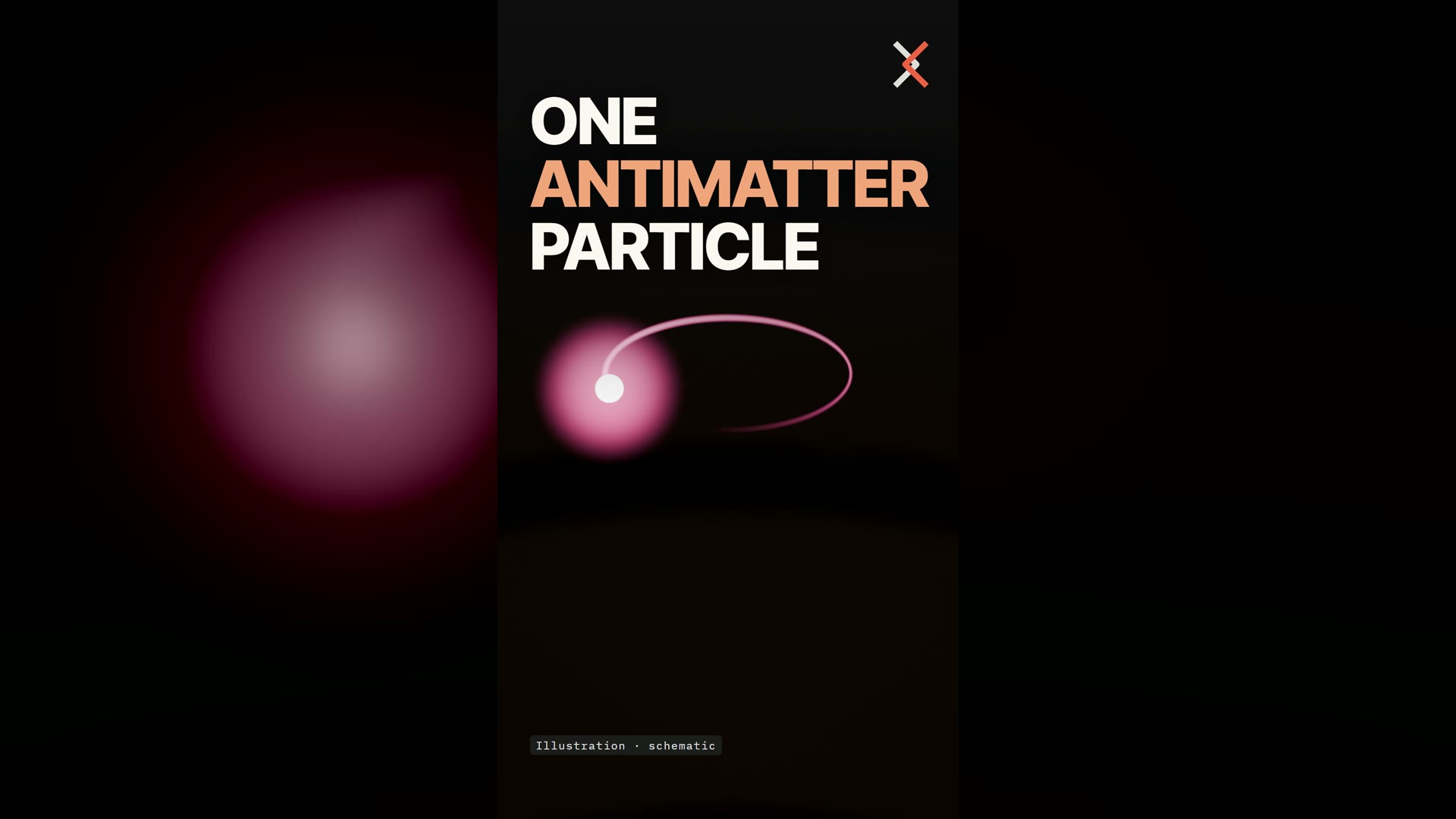 Space & Science2 min readNº 010One Particle of Antimatter, Held for MonthsPhysicists at Northwestern University have held a single positron, the electron's antimatter twin, in a magnetic trap for months. They can now watch it climb one energy step at a time.Read story
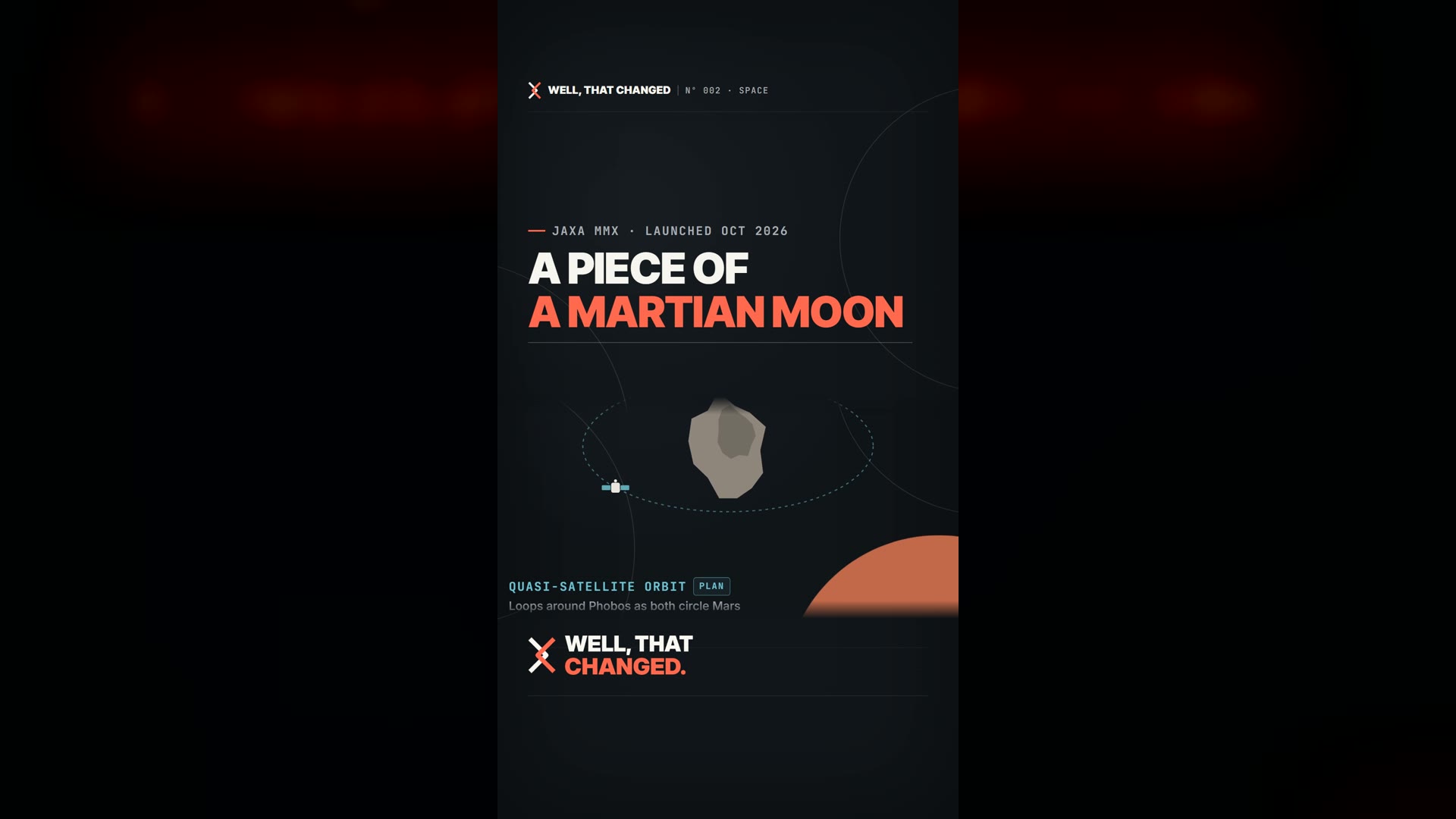 Space & Science2 min readNº 002Japan Is Going to Mars's Moon Phobos — and Plans to Bring a Piece BackJAXA's MMX spacecraft has launched toward Phobos, one of Mars's two moons. The plan is to bring at least 10 grams of it back to Earth by 2031.Read story
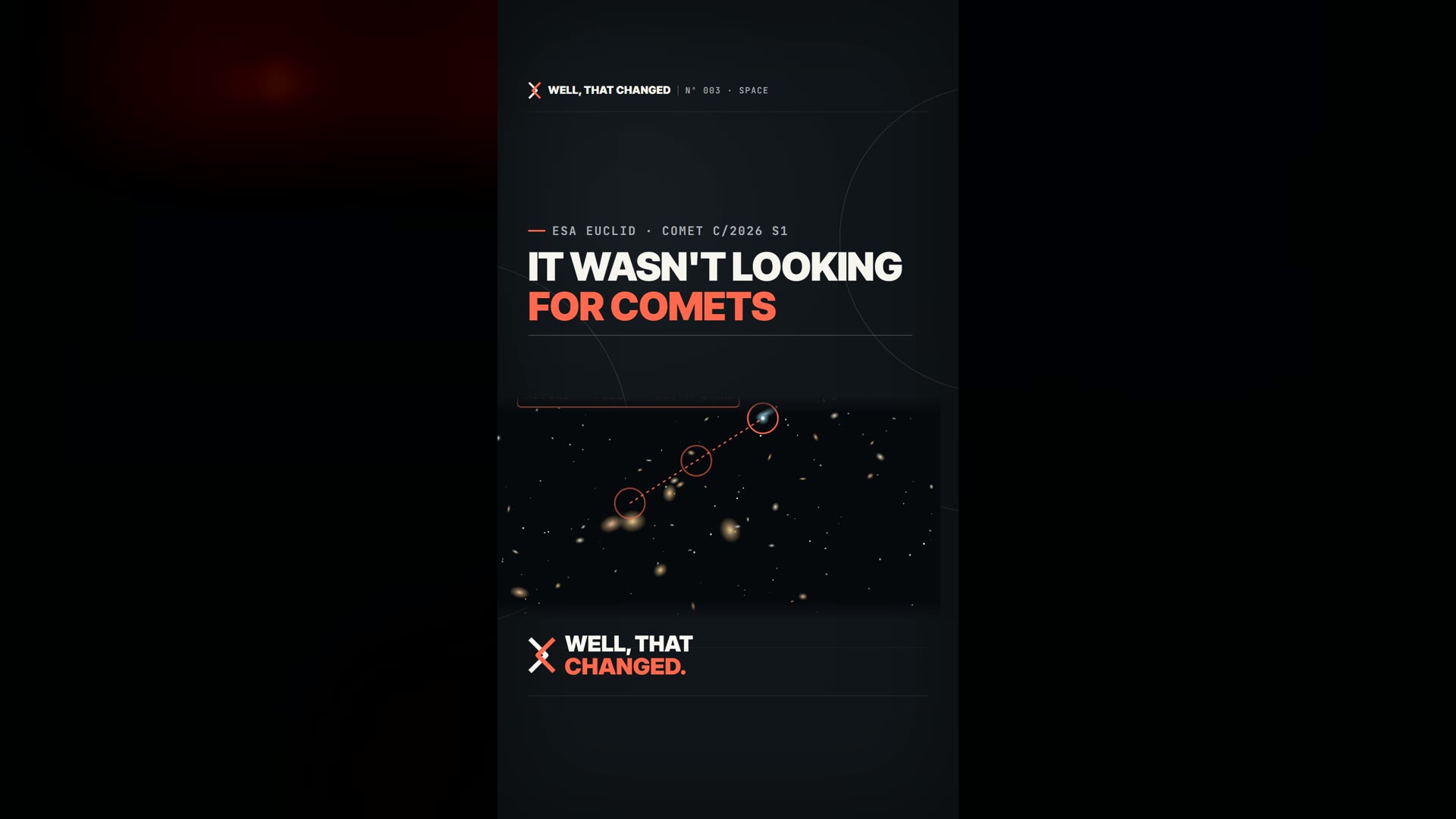 Space & Science2 min readNº 003A Dark-Universe Telescope Just Found a New CometEuclid was built to map the dark universe, not to hunt comets. In September 2026 its images caught a previously unknown one, now named C/2026 S1 (Euclid).Read story